

Best Time of Year to Schedule Asphalt Sealcoating
Sealcoating is one of the most effective ways to protect that investment, but the benefits only hold up if the product is applied under the right conditions.
This Halloween, the scariest thing on your property probably isn’t a costume. It’s the parking lot. Cracks that spread like something alive, faded lines that vanish at dusk, and potholes waiting to trip an unsuspecting visitor add up to a real house of horrors, and unlike the seasonal kind, these frights come with liability attached.
The good news is that none of these hazards are supernatural. Every one has a cause and a fix. At G-FORCE® we bring military-grade precision to hunting down parking lot hazards before they turn into accidents and claims. So grab a flashlight and let’s walk your lot after dark. Here are the common parking lot problems haunting property managers, and how to put each one back in its grave.
Asphalt cracks are the zombies of the parking lot. You can ignore them, but they never stay small, and they always come back bigger. The moment a crack forms, it starts letting water into the pavement. Water is the number one enemy of asphalt, and once it seeps into the base, the freeze-thaw cycle of winter pries the crack wider and wider until you have a full structural failure on your hands.
The fix is to seal cracks early and often. Professional crack sealing fills the void with hot rubber that keeps water out and stops the spread. October is the perfect time to do it, right before winter water gets its chance to do real damage.
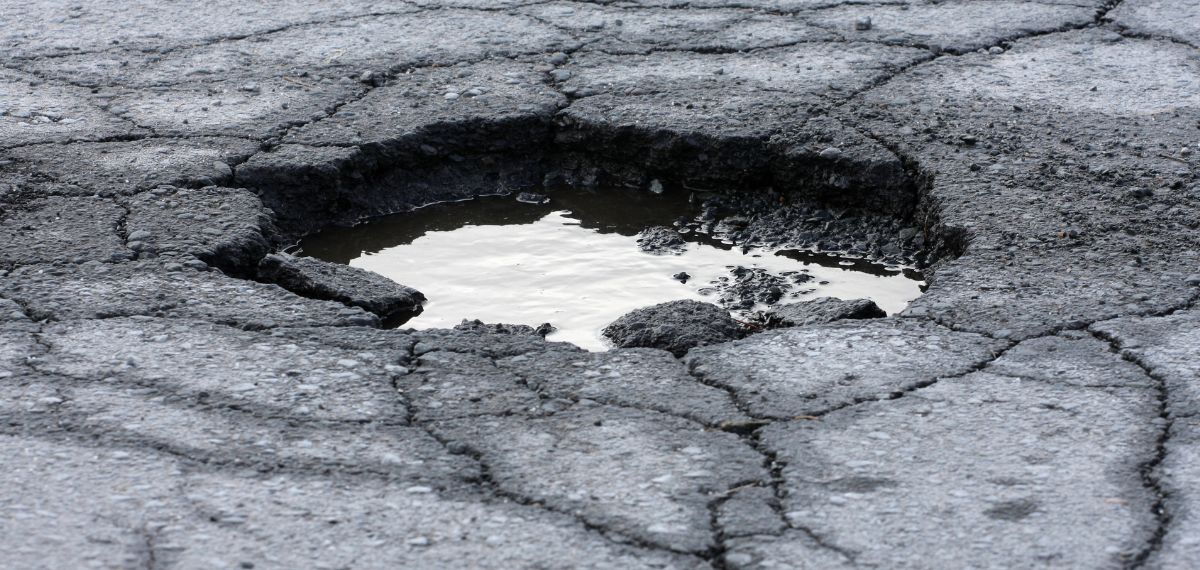
If cracks are zombies, potholes are the monsters they grow into. A pothole is more than an eyesore. It’s a genuine trip hazard for pedestrians and a wheel-bending threat to vehicles, and from a liability standpoint it’s one of the most common sources of personal injury claims in commercial lots. A visitor who catches a heel in a pothole after a fall event or a late shift is a claim waiting to happen.
Don’t let potholes lie in wait. Prompt pothole repair removes the hazard and protects your budget from a much larger repaving bill down the road. Catch them at the first sign of distress and you keep a small problem from becoming a big one.
Faded parking lines are the ghosts of your lot. They were there once, but now drivers can barely see them, and when people can’t tell where a stall ends and a lane begins, they guess. Guessing in a crowded lot is how bumpers meet and how pedestrians get pinched between cars.
Bring your lines back from the dead with fresh parking lot striping. Crisp, high-contrast stalls, arrows, and crosswalks tell everyone exactly where to be. Most commercial lots need a refresh every 18 to 36 months, so if your stripes have faded into the pavement, it’s time to restripe before winter and the holiday rush.
Faded accessible symbols, narrow stalls, blocked access aisles, and missing signage are federal compliance failures, and serial litigants actively scout commercial lots looking for them. That’s a real nightmare for a property manager, and it can strike any brand at any time.
Keep the lawyers at bay with ADA-compliant striping that meets the ADA Standards for Accessible Design. Correct stall widths, clear access aisles, properly angled symbols, and legible signs protect the people who need accessible parking most and shield you from drive-by lawsuits at the same time.
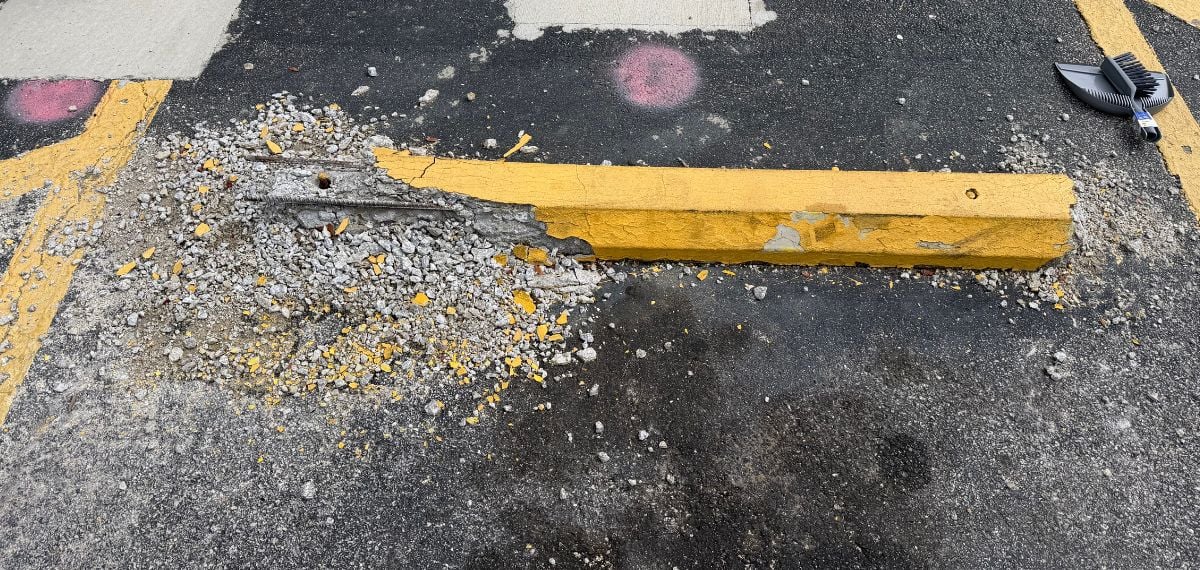
A wheel stop is supposed to protect people. But a cracked, loose, or crumbling one flips the script and becomes the trip hazard it was meant to prevent. The same goes for wheel stops that have shifted out of line and no longer stop vehicles where they should, leaving your walkways and storefronts exposed.
Repair or replace them before someone finds them the hard way. Proper wheel stop installation, anchored solidly and placed on the same plane across the row, keeps vehicles off your sidewalks and keeps the stops themselves from becoming a hazard.
An old, gray, crumbling lot doesn’t just look haunted. It’s actively deteriorating. Oxidized asphalt is brittle, cracks more easily, and gives water an open invitation. Left alone, it slides toward the pothole-and-patch cycle nobody enjoys paying for.
Sealcoating is the protective layer that keeps the monsters out. A fresh coat of asphalt sealcoating every one to three years shields the surface from water and UV damage, and it makes your lines pop against a clean, dark background. Fold it into an ongoing pavement maintenance plan and you stop the horror story before it starts.
Every scary movie has a dark corner, and your lot shouldn’t. Poor visibility hides hazards from drivers and pedestrians alike, and missing or faded signs leave traffic flow up to guesswork. Add faded fire lane markings and you’ve got a code violation lurking in the shadows too.
Clear the fog with proper parking lot sign installation and bright, legible markings. Stop signs, directional arrows, pedestrian crossings, and crisp fire lanes reinforce the pattern you striped into the pavement and keep everyone moving safely, day or night.
The scariest parking lot hazards aren’t ghosts or goblins. They’re the cracks, potholes, faded lines, and broken wheel stops that quietly raise your risk every single day. The difference between a safe lot and a house of horrors is a property manager who hunts these problems down before they strike.
That’s our mission. If it’s on your property, it’s your liability, and a lot that’s sealed, striped, and maintained is one that won’t come back to haunt you.
Ready to exorcise your parking lot hazards before winter? Contact a G-FORCE® near you or call 844-464-3672 for a fast, free quote. We’ll walk your property, flag every scare, and build a plan that’s built to code and built to last.
Sealcoating is one of the most effective ways to protect that investment, but the benefits only hold up if the product is applied under the right conditions.
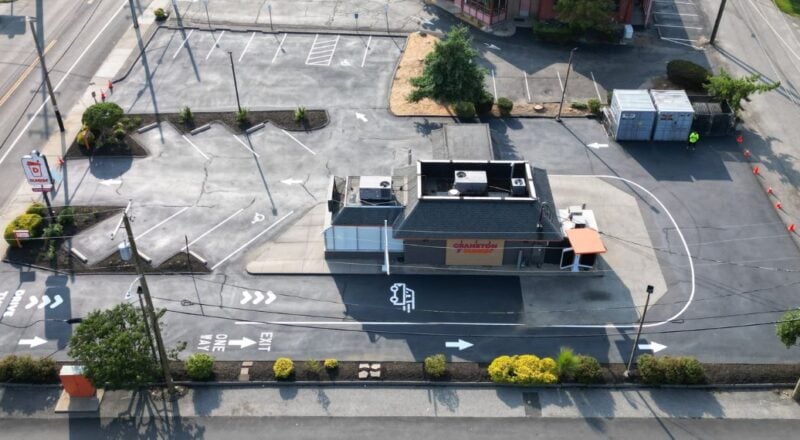
Learn how to reduce parking lot accidents with smart layout, fresh striping, ADA compliance, and pavement maintenance.
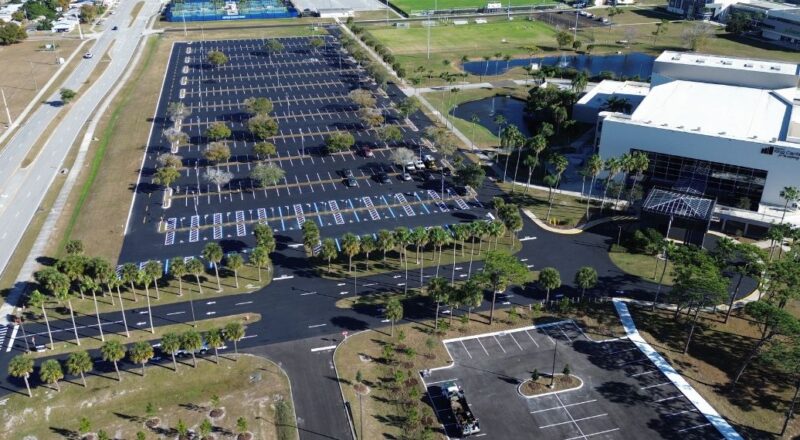
Your parking lot is one of your property's biggest assets, and industry data shows that regular maintenance like sealcoating can extend the life of your asphalt up to eight years. We suggest a logistical approach that treats your lot as a series of manageable steps rather than one big obstacle.
 Request Estimate