Wheel stops are one of the smallest features in your parking lot and one of the most important. Those low concrete or rubber blocks at the head of a parking space do a big job for their size. They tell a driver exactly where to stop, and they keep a vehicle from rolling where it doesn’t belong. For a property manager, that little block is often the last line of defense between a parked car and a storefront window, a walkway, or a pedestrian.
Also called parking stops, parking bumpers, or curb stops, wheel stops are easy to overlook until one is missing or broken. At G-FORCE® we install them with the same military-grade precision we bring to every job, because getting them right is a matter of safety, not just tidiness. Here’s why wheel stops are essential for parking lot safety, and what proper installation actually involves.
What Are Wheel Stops and How Do They Work?
A wheel stop is a raised barrier, usually concrete or recycled rubber, anchored at the front of a parking space. When a driver pulls in, the front tires meet the stop and the vehicle halts in a consistent, predictable position. That simple function delivers three things at once:
- It stops the car in the right spot.
- It protects whatever is on the other side.
- It keeps the stall lined up with the striping so the whole row stays orderly.
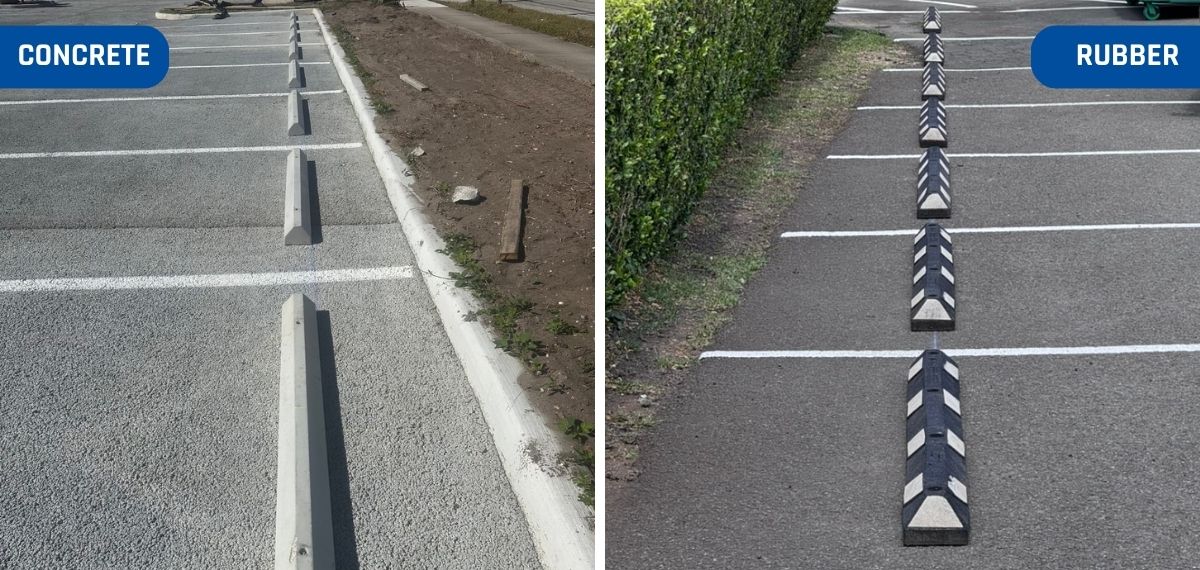
Concrete wheel stops are the traditional choice and hold up well under heavy use. Rubber wheel stops are lighter, resist cracking, and are often made from recycled material. The right choice depends on climate, traffic, and the surface you’re anchoring into, which is a good conversation to have before installation rather than after.
How Wheel Stops Improve Parking Lot Safety
The biggest safety payoff of installing wheel stops is pedestrian protection. Walkways, building entrances, and cart corrals sit just beyond the front of many parking spaces. A properly placed wheel stop keeps a vehicle from creeping over the curb and onto the sidewalk where people are walking. In a busy lot, that margin matters.
Wheel stops also protect your property. Storefronts, glass, light poles, landscaping, and signage all take damage when a car rolls or lunges too far forward. A pedal slip or a distracted driver is a lot less costly when there’s a solid block stopping the tire. And they protect vehicles from each other, keeping cars from nosing into the next stall or the row facing them.
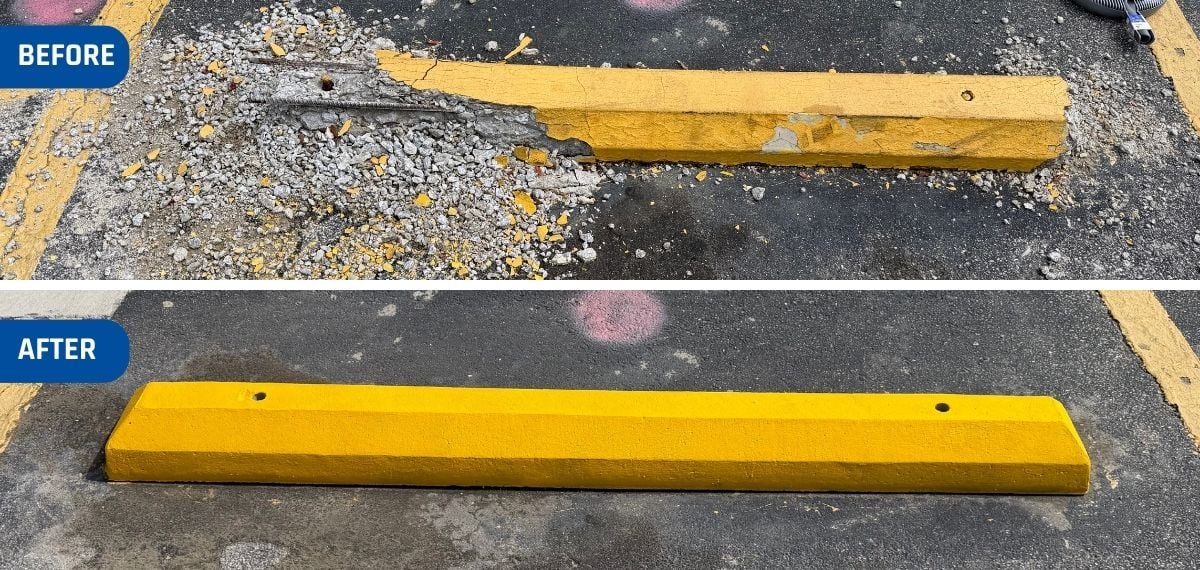
There’s a real liability angle here too, and it cuts both ways. Well-maintained wheel stops reduce the collisions and property damage that lead to claims. But a cracked, loose, or poorly placed wheel stop becomes a trip hazard, which is one of the most common sources of personal injury claims in commercial lots. That’s why installation and upkeep both matter. A wheel stop only does its job when it’s solid, anchored, and where it belongs.
Where Wheel Stops Are Most Important
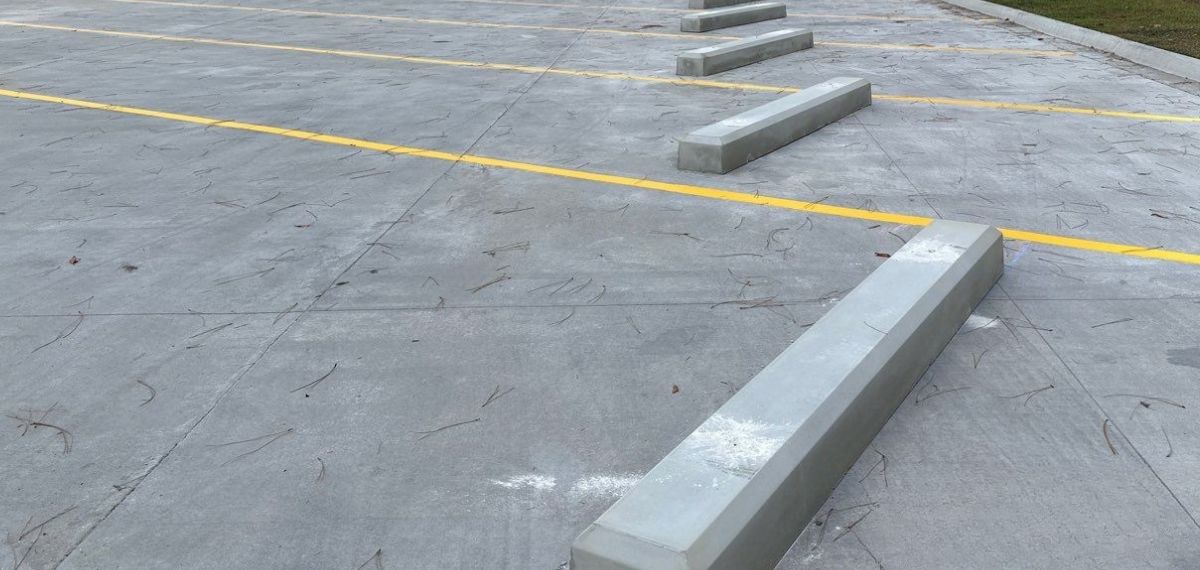
Not every space needs a wheel stop, but some areas almost always do. Prioritize spaces that front a sidewalk or building, ADA accessible stalls where clear access aisles must stay protected, spaces facing glass storefronts or utilities, and any spot where a rolling vehicle could reach a pedestrian path. Parking garages are their own case, since drilling into a structural deck is often not allowed and calls for a different anchoring method.
How G-FORCE® Installs Wheel Stops the Right Way
Proper placement is what separates a wheel stop that works from one that just sits there. Typically, our crews measure 2 feet back from the front curb across the entire row and snap a line so every stop lands on the same plane. Then we find the center of each parking space, match it to the center of the wheel stop, and align the two. That keeps the row consistent and the stops squared with your striping.
For anchoring into asphalt or concrete, we drill through the pre-drilled holes in the wheel stop using a concrete pin, then drive the pin home without chipping the block. In parking garages and other spots where drilling into the deck isn’t permitted, we secure the wheel stop with epoxy instead, so you get a solid installation without penetrating the concrete. If the stops need painting for visibility, we always use overspray protection to keep the surrounding pavement clean.
That level of care is the difference between wheel stops that hold up for years and ones that work loose, shift out of line, or become the trip hazard you were trying to prevent. Explore our wheel stop and parking stop installation services to see how we handle it start to finish.
Wheel Stops Work Best as Part of a Complete Safety Plan
Wheel stops do their best work alongside the rest of your parking lot safety features. Crisp parking lot striping keeps stalls clear, bollards guard entrances and walkways, and parking lot signs direct traffic flow. Layer them together and you engineer a lot where drivers and pedestrians stay safely separated. Add regular pavement maintenance so the surface you’re anchoring into stays sound, and the whole system holds up.
Frequently Asked Questions
How far from the curb should a wheel stop be placed?
A common standard is to set wheel stops about 2 feet back from the front curb and centered in the stall, so the vehicle stops in a consistent position without overhanging walkways.
Are concrete or rubber wheel stops better?
Both work well. Concrete is durable and traditional, while rubber is lighter, resists cracking, and is often made from recycled material. The best choice depends on your climate, traffic, and surface.
Do parking garages require different wheel stop installation?
Often, yes. Many garages don’t allow drilling into the structural deck, so wheel stops may be secured with epoxy instead of concrete pins to avoid penetrating the concrete.
Can broken wheel stops be a liability?
Absolutely. A cracked or loose wheel stop becomes a trip hazard and a source of personal injury claims. They should be repaired or replaced promptly.
Protect Your Property With Professionally Installed Wheel Stops
Wheel stops are small, but their job is not. They protect pedestrians, guard your buildings and vehicles, keep your stalls orderly, and reduce the accidents and claims that eat into your budget. The catch is that they only deliver when they’re placed correctly, anchored solidly, and kept in good shape.
That’s what we do best. If it’s on your property, it’s your liability, and properly installed wheel stops are a simple, high-value way to make your lot safer.
Ready to add or replace wheel stops? Contact a G-FORCE® Parking Lot Striping near you or call 844-464-3672 for a fast, free quote. We’ll assess your lot, recommend the right stops, and install them built to code and built to last.