Asphalt driveways and parking lots take a beating from sun, rain, freeze-thaw cycles, and everyday traffic. Sealcoating is one of the most effective ways to protect that investment, but the benefits only hold up if the product is applied under the right conditions — and there are several key benefits worth understanding before you plan a project. Scheduling sealcoating at the wrong time of year can mean a coating that never fully cures, wears away faster than expected, or simply fails to bond properly with the asphalt underneath. Understanding how timing affects the outcome helps property owners get the most value out of every application.
Why Timing Affects Sealcoating Results
Sealcoating is not just a cosmetic treatment poured onto a driveway and left to dry on its own schedule. It is a chemical process that depends heavily on temperature, humidity, and moisture. When sealer is applied, it needs time to cure properly, which means the water content in the product has to evaporate at a steady, predictable rate. If conditions are too cold, too wet, or too humid, the curing process slows down or stalls entirely. This can leave the surface tacky, uneven, or prone to peeling soon after application. Choosing the right season is really about giving the sealer the best possible environment to bond with the asphalt and harden into a durable, protective layer.
Ideal Temperature and Weather Conditions
As a general rule, sealcoating performs best in warm, dry weather. Cooler air and cold pavement slow curing time significantly, while rain or high humidity shortly before or after application can wash away the sealer or trap moisture beneath the surface. Most professionals recommend avoiding application when freezing temperatures are expected, since cold conditions prevent the material from setting correctly. A dry forecast for at least a day or two after application is also important, since fresh sealcoating needs time to cure before it can handle rain or heavy foot and vehicle traffic. In short, the ideal window combines warm daytime temperatures, low humidity, and a stretch of dry weather.
Seasonal Breakdown
Spring Sealcoating
Spring can be a good time to sealcoat once temperatures have warmed up consistently and the risk of overnight frost has passed. It’s also a natural time to address any cracks or damage left behind by winter weather before sealing the surface — for larger repairs, breaking the work into manageable phases can make the project easier to plan around. The main challenge in spring is unpredictable rainfall, so it’s important to plan around a stretch of dry days rather than sealcoating right before a storm.
Summer Sealcoating
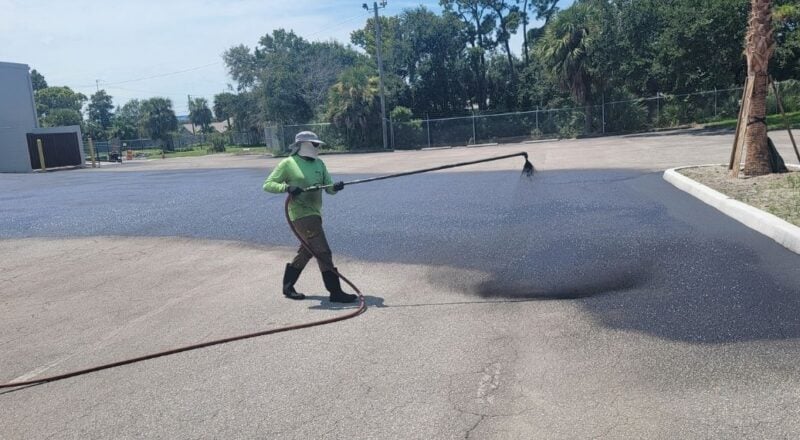
Summer is generally considered the prime season for sealcoating in most regions. Warm, dry, and sunny conditions allow the sealer to cure quickly and evenly, which is exactly what the material needs to perform well. The main consideration in summer is scheduling around extreme heat waves or sudden thunderstorms, but overall, the long stretches of stable warm weather make summer a reliable choice for many property owners.
Fall Sealcoating
Early fall can still offer favorable sealcoating conditions, as long as temperatures remain warm enough and there is enough daylight left for the sealer to cure fully before temperatures drop at nightfall. As fall progresses, the window narrows, since cooler nights and shorter days make it harder for the sealer to set properly. Scheduling early in the season, rather than waiting until late fall, gives the best chance of a successful application.
Why Winter Sealcoating Doesn’t Work
Winter is widely regarded as the least suitable time for sealcoating. Freezing or near-freezing temperatures prevent the sealer from curing correctly, and snow, ice, and moisture on the pavement interfere with proper bonding — in fact, cold weather affects your parking lot well beyond just sealcoating timing. Even if a rare mild day appears in the middle of winter, the surrounding cold conditions before and after application make it difficult to guarantee a lasting result. For these reasons, most professionals recommend avoiding sealcoating projects entirely during the winter months and instead planning for a warmer season.
Planning Ahead with a Sealcoating Company
Because weather conditions can shift quickly and good sealcoating windows are often limited, it helps to plan ahead rather than waiting until the last minute. Booking early in the season allows more flexibility to work around forecasts and avoid rushed scheduling during peak demand. It’s also worth knowing how often your lot actually needs to be sealcoated, since that affects how far out you should be planning. In some cases, especially with pavement that has significant wear, it’s worth understanding when sealcoating makes sense versus full resurfacing. Property owners who work with an experienced sealcoating company can get guidance on the best timing for their specific climate and pavement condition, helping ensure the application has the best possible chance to cure properly and protect the asphalt for years to come. Taking a proactive approach to scheduling is one of the simplest ways to get lasting value from a sealcoating project — and if you’re ready to get started, you can find a sealcoating team near you.