Your parking lot is the first thing a customer touches and the last thing they see on the way out. It’s also where a surprising number of accidents happen. Fender benders, backing collisions, trips and falls, and the occasional pedestrian scare. For a property manager, every one of those is a headache, a possible insurance claim, and sometimes a lawsuit with your name on it.
Here’s the good news. Most parking lot accidents aren’t bad luck. They’re the predictable result of a lot that’s laid out poorly, marked faintly, or falling apart. To reduce parking lot accidents, you fix those root causes before they turn into claims.
7 Ways to Reduce Parking Lot Accidents
At G-FORCE® we bring military-grade precision to that mission, guided by a simple standard on every job: make it match the plans, make it legal, make it square, make it straight, and make it right. Here are seven ways to apply that same thinking to your property.
1. Improve Your Parking Lot Layout and Traffic Flow
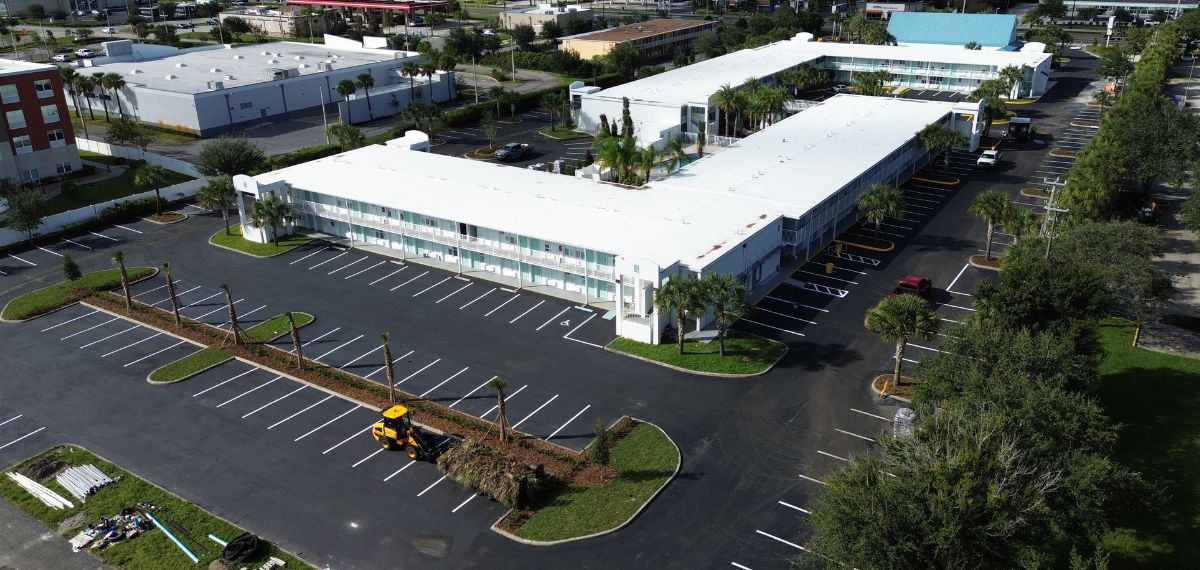
A lot of accident-prone lots were set up to fail from day one. Travel lanes too narrow. Stalls crammed at the wrong angle. Cars backing into a lane with nowhere to go. No amount of fresh paint fixes a bad plan. It just makes the bad plan easier to see.
Proven drive-aisle dimensions exist for a reason. With 90-degree stalls on both sides of a two-way travel lane, you want 24 feet of drive aisle. Make it one-way and you can tighten it to 22. Two-way traffic with stalls on only one side is still 22 feet. One-way with stalls on one side can drop to 18. Those numbers give drivers room to turn, back out, and correct without clipping the next car or a person walking through.
Angled parking is often the safest move for tight or busy lots. It slows traffic, makes backing out easier, and channels cars in one direction. If you’re not sure your lot has room to do it right, have it measured before you commit. “Looks like it’ll fit” and “actually fits to code” are two very different things.
2. Restripe Faded Parking Lot Lines and Markings
Faded lines are an accident waiting to happen. When drivers can’t clearly see where a stall ends and a lane begins, they guess, and guessing in a crowded lot is how bumpers meet. Crisp, high-contrast parking lot striping tells everyone exactly where to be.
It also has to be correct. Crooked stalls and lines that drift into the drive aisle create confusion and pinch the very travel lanes that keep cars apart. At G-FORCE® we hold a tight standard on our work. Straight lines, square starts, everything on the same plane. A lot that reads clearly is a lot people move through safely. Most commercial lots need a refresh every 18 to 36 months depending on traffic and weather, so if your lines look more like bananas than straight lines, or you’re squinting to find them at dusk, it’s time to restripe.
Directional markings matter just as much as the stalls. Clear arrows, “STOP” and “YIELD” legends, crosswalks, and hatched no-parking zones remove the guesswork at the exact spots where paths cross and accidents cluster.
3. Add Clear Parking Lot Signage and Traffic-Calming
Paint on the ground works best when it’s backed up by signs at eye level. Stop signs at internal intersections, one-way and directional signs, pedestrian crossing signs, and posted speed limits all reinforce the pattern you striped into the pavement. When the ground and the signs tell the same story, drivers follow it.
Speed is a factor in many lot accidents, and simple traffic-calming features help. Speed bumps in long straightaways, well-marked crosswalks connecting the lot to your entrance, and bollards protecting doorways, walkways, and cart corrals all slow things down and keep vehicles away from people on foot. Freshly painted, high-visibility bollards do double duty. They protect and they warn. Proper parking lot sign installation ties the whole system together.
4. Maintain ADA-Compliant Accessible Parking
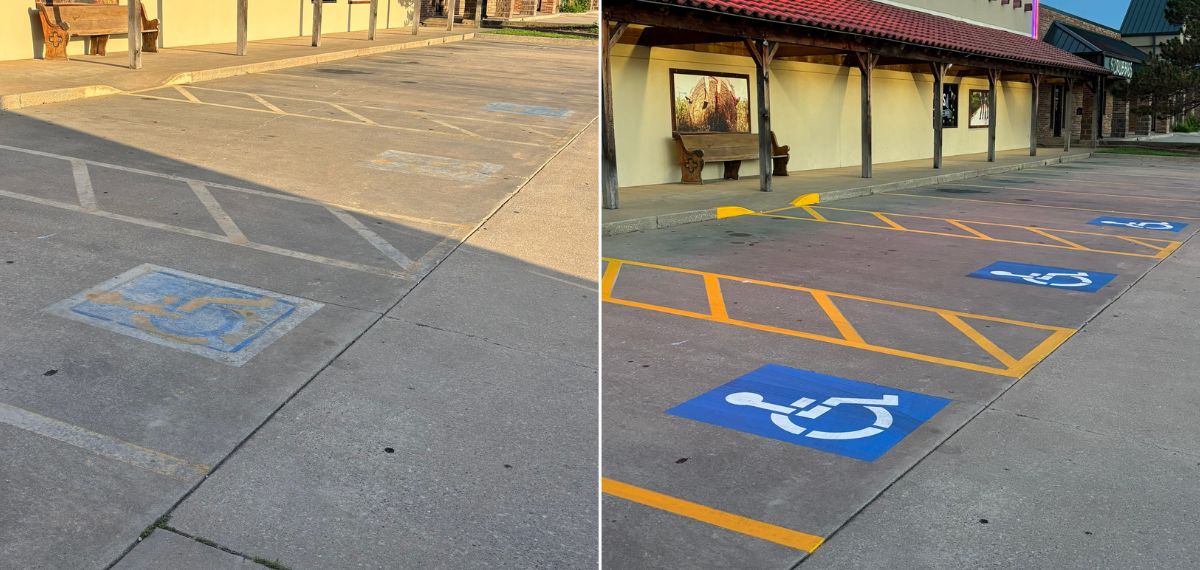
Accessible parking isn’t a box to check. It’s a safety issue for the people who need it most, and it carries real legal exposure if you get it wrong. Federal ADA Standards for Accessible Design govern the number, size, and placement of accessible stalls and their signage, including a minimum 5-foot head clearance beneath the bottom of the sign. A standard accessible stall must be at least 8 feet wide with an access aisle at least 5 feet wide. Your state or town may require more, so always verify locally.
Serial litigants actively scout commercial lots for faded symbols, narrow stalls, and missing signs. That makes ADA-compliant striping one of the most effective ways to deflect drive-by lawsuits while keeping your lot genuinely safe. When a symbol is faded or an access aisle is unmarked, you’re risking both an accident and a complaint. If you’re unsure whether your lot is compliant, have it inspected. This is one area where “close enough” isn’t.
5. Install Wheel Stops and Bollards to Protect Pedestrians
Small details prevent a lot of claims. Wheel stops, properly placed and anchored, keep cars from rolling into walkways, buildings, or the next stall. But a loose or broken wheel stop becomes a trip hazard, so they need to be maintained, not just installed. Pair them with bollards at building entrances and walkways, and you put a physical barrier between moving vehicles and people on foot.
6. Keep Up With Pavement Maintenance, Crack Sealing, and Sealcoating
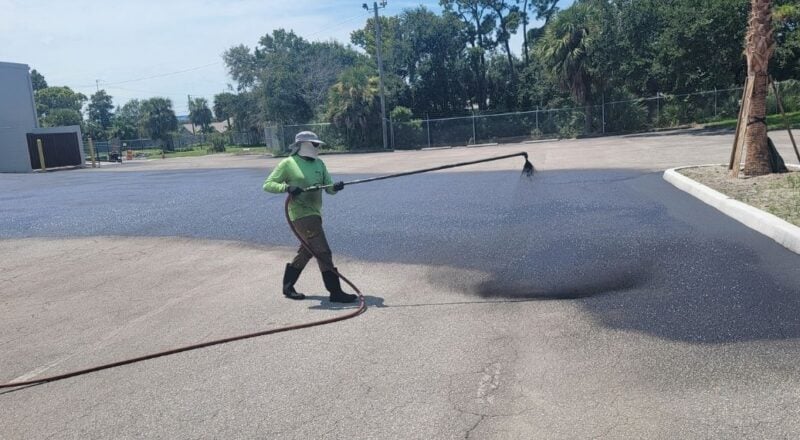
The pavement under everyone’s feet is a safety surface, not just a parking surface. Water is the number one enemy of asphalt, and the cracks and potholes it creates are prime causes of trips, falls, and vehicle damage. Cracks never get smaller on their own. They only grow, and once they open up they let in more water, erode the base, and turn into potholes.
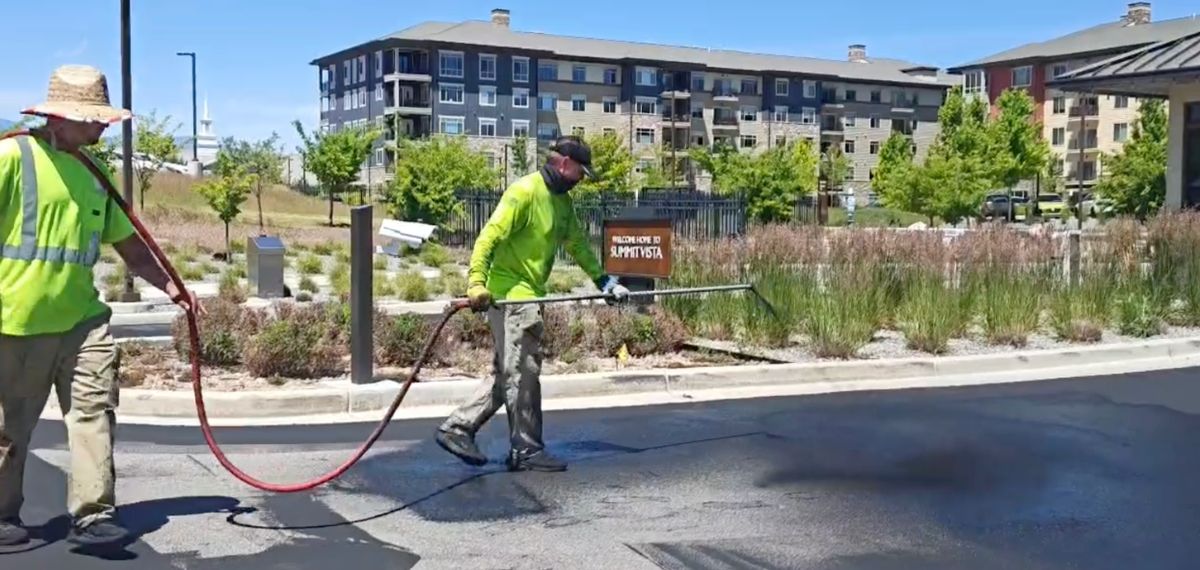
Staying ahead of that is a strategic move, not just housekeeping. Addressing crack sealing and pothole repair at the first sign of distress, then protecting the surface with asphalt sealcoating every one to three years, keeps the surface smooth and safe and protects your pavement investment at the same time. A dark, freshly sealed lot with bright new lines is easier to see, easier to navigate, and far less likely to catch a heel or a tire. Building this into an ongoing pavement maintenance plan is the cheapest insurance you’ll ever buy.
7. Improve Parking Lot Lighting and Visibility
The best striping in the world doesn’t help if nobody can see it after dark. Well-lit lots reduce both accidents and the other kind of incident you’d rather avoid. Replace burned-out and flickering fixtures, add light to dark corners, and cut down the shadows where hazards, and worse, can hide. Good lighting is the final layer that makes all your striping, signage, and layout work actually work at night.
Frequently Asked Questions
How often should I restripe my parking lot?
Most commercial lots should be restriped every 18 to 36 months, and sooner in high-traffic areas like entrances, crosswalks, and loading zones. If lines are faded enough that drivers hesitate, don’t wait.
What is the most common cause of parking lot accidents?
Poor visibility and confusing layouts lead the list. Faded markings, missing signs, tight drive aisles, and blind backing situations account for a large share of collisions and pedestrian incidents.
Does ADA compliance really affect safety and liability?
Yes. ADA-compliant accessible parking protects the people who need it most and shields you from costly drive-by lawsuits that specifically target non-compliant lots.
Reduce Parking Lot Accidents Before They Cost You
Reducing parking lot accidents comes down to a handful of things done well. A layout that gives drivers room. Striping that’s bright and correct. Signage and traffic-calming that reinforce the flow. Accessible parking that meets code. Pavement that’s maintained before it fails. None of it is complicated, but all of it has to be done right, and a lot of it has to be done to code.
That’s the part we take seriously. If it’s on your property, it’s your liability, and a lot that’s laid out clearly, marked crisply, and maintained consistently protects both your people and your bottom line.
Ready to make your lot safer? Contact a G-FORCE® near you or call 844-464-3672 for a fast, free quote. We’ll walk your property, flag the trouble spots, and build a plan that’s built to code and built to last.