
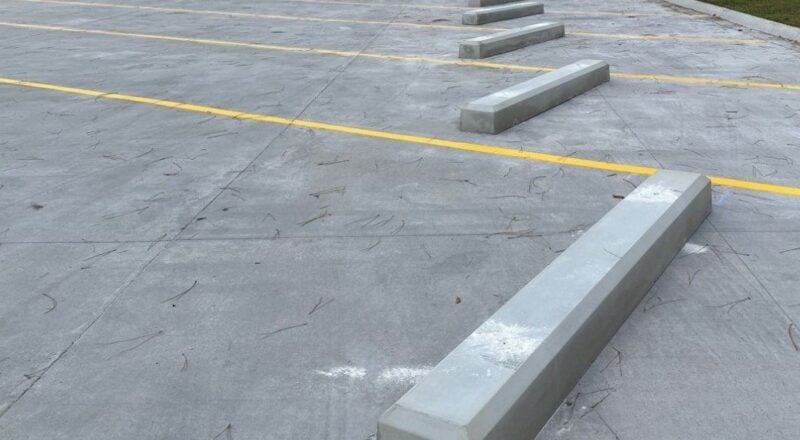
Why Wheel Stops are Essential for Parking Lot Safety
Discover why wheel stops are essential for parking lot safety and how G-FORCE installs them right.
Every driveway and parking lot owner eventually faces the same decision: patch up the pavement with a store-bought sealer or bring in someone who does this for a living. Both paths lead to the same goal — a protected asphalt surface, with real benefits either way — but they arrive there very differently. Understanding what each option actually involves makes the choice much clearer.
Sealcoating products are widely available at hardware and home improvement stores, sold in buckets or bags ready to mix with water. The typical DIY process includes cleaning the surface of dirt, oil stains, and debris, filling small cracks, taping off edges, and then applying the sealer with a squeegee or roller. On paper, it sounds simple enough for a weekend project. In practice, it requires more preparation, timing, and physical effort than most homeowners expect, especially for larger driveways or lots with existing damage.
While DIY sealcoating can save money upfront, it introduces several risks that often surface only after the sealer has dried and the surface is back in use.
Uneven coverage is one of the most common mistakes, leaving some areas over-saturated and others too thin to offer real protection. Applying sealer in the wrong weather conditions, such as when temperatures are too low or rain is expected within the drying window, can also ruin the finish — cold weather in particular has a notable effect on pavement and application timing. Streaking, puddling, and tire tracking are frequent results when the material isn’t spread with consistent pressure and timing.
Consumer-grade sealcoating products are generally formulated for smaller, lighter-use surfaces and may not hold up as well under heavy vehicle traffic or harsh weather cycles. Mixing ratios, dilution levels, and additive use can vary significantly between brands, and getting them wrong affects durability. Without the ability to test or adjust the mix for specific pavement conditions, DIY applicators are often working with a one-size-fits-all product on a surface that has its own unique needs.
Hiring a professional changes the equation considerably. Contractors bring specialized equipment, such as spray systems and mechanical squeegee machines, that apply sealer more evenly and efficiently than hand tools. They also have experience reading pavement conditions, identifying cracks or drainage issues that need attention before sealing — the kind of prep work covered in our guide on what to ask a pothole repair contractor — and selecting or adjusting materials accordingly. Professional crews understand how weather, humidity, and surface temperature affect cure times, which helps prevent the common failures associated with DIY jobs. For property owners who want the process handled correctly from start to finish, working with an experienced sealcoating contractor means the prep work, application, and cleanup are all managed by people who do this routinely rather than occasionally.
The upfront cost comparison between DIY and professional sealcoating can be misleading if it doesn’t account for longevity. A poorly applied DIY coat may need to be redone sooner, sometimes within a year or two, while a properly applied professional job is designed to protect the asphalt for a longer stretch of time — understanding how often a lot actually needs to be resealed can help put that difference in perspective. There’s also the cost of correcting mistakes: uneven application, missed cracks, or premature wear can lead to more extensive asphalt repairs down the road. When factoring in the time spent on preparation, application, and potential redo work, along with the durability difference, professional sealcoating often delivers better value over the life of the pavement, even though the initial invoice is higher.
For very small surfaces with minimal wear, a careful DIY approach might be a reasonable option if the property owner is prepared to follow proper procedures and accept some risk of uneven results. However, for driveways and parking lots that see regular vehicle traffic, have existing cracks or drainage concerns, or simply need a reliably even, long-lasting finish, professional sealcoating is generally the safer investment. Weighing the time, materials, and potential for costly mistakes against the reliability of professional equipment and expertise usually points toward hiring a contractor, particularly for larger or higher-traffic surfaces where the margin for error is smaller and the cost of redoing the job is higher. If you’re ready to compare the DIY math against a professional quote, you can find a sealcoating contractor near you to get started.
Discover why wheel stops are essential for parking lot safety and how G-FORCE installs them right.
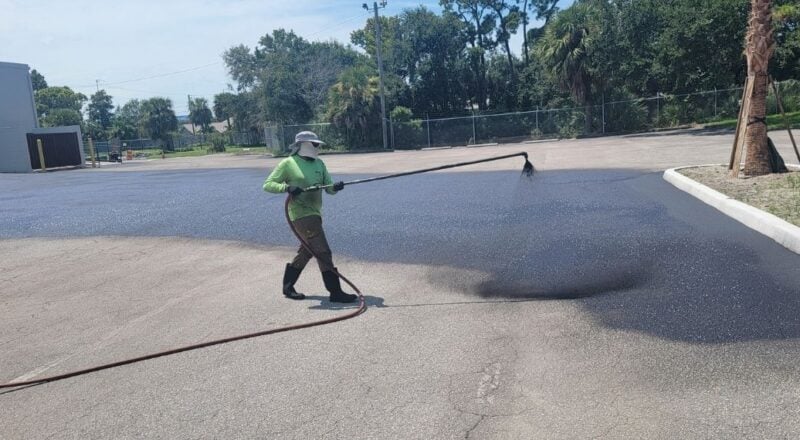
While every project is different, the cost of sealcoating is shaped by a consistent set of variables: the size and condition of the surface, the type of material used, and local labor and market conditions. Understanding these factors can help you evaluate quotes more confidently and avoid surprises once work begins.

Discover the seven most common parking lot problems haunting property managers.
 Request Estimate